Run it Back
Project Name
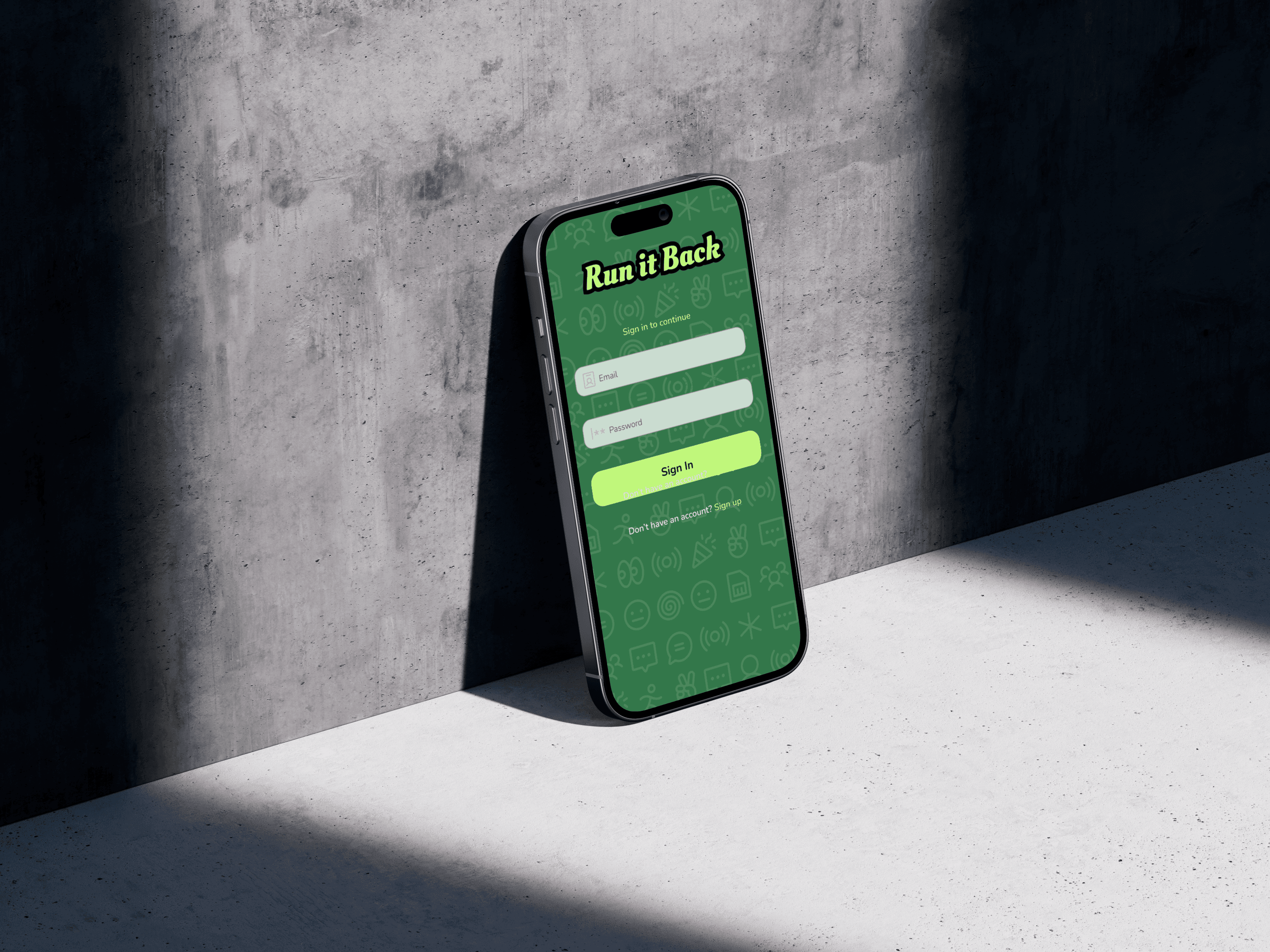
Run it Back mobile & web app
Industry
Houston TX
Role
App builder
Team
1
Timeline
5 days
The Problem
After three years attending Afrotech, I noticed the same pattern every time. I'd meet interesting people, connect on LinkedIn, then lose all context within days. Not just names, but the actual substance: what we talked about, why the connection mattered, what I said I'd follow up on
LinkedIn and business card apps solve collection. None of them preserve context. That gap costs real value, not just socially, but professionally. Conferences like Afrotech draw 40,000+ attendees. The ROI of attending depends entirely on what happens after.
I decided to build something to fix it, and to use the build as a test of AI-assisted development at real product speed.
Constraints
The constraints shaped every decision.
Hard deadline: Afrotech was immovable. The app had to ship before I boarded the plane. Solo execution: No team, no handoffs, no safety net. Offline requirement: Conference WiFi is notoriously unreliable. The app had to work without it. No App Store: A four-day timeline rules out Apple review. PWA was the only viable path.
These weren't obstacles. They were the product brief.
AI as Thought Partner, Not Code Completer
The most important decision I made was how to use AI. I didn't treat Cursor and Claude as autocomplete tools. I used them as a strategic thought partner throughout planning, scoping, and architecture, then as an accelerant during implementation.
Before writing a line of code, I worked through the problem space with Claude: feasibility, MVP scope, data model, offline sync strategy. That upfront investment in structured thinking, what I now call a PRD-first approach, paid off throughout the build.
This mirrors how I approach UX: define the problem clearly before designing the solution.
Design System First
I knew from prior experiments that AI code assistants are poor aesthetic decision-makers. They can implement a design system with precision, but they can't make good visual judgments independently.
So I spent the first half of Day 1 building a simple design system in Figma before touching code. That felt uncomfortable given the timeline, but it eliminated constant visual decision-making during development and produced a visually consistent product throughout.
Ruthless Scope Control
The four-day window forced a discipline I'd recommend regardless of timeline. Every feature had to justify its existence against the core use case: capture who I met, what we discussed, and why it matters, fast enough to do it between sessions.
Features that didn't serve that use case went to the backlog immediately.
What I Built
A PWA with: check it out
Connection capture optimized for speed, name, context, conversation notes
Offline sync so the app worked even when the conference WiFi didn't
Data persistence to a cloud database
PWA installation on both iOS and Android
Development time: 5 days to a functioning prototype, 40% under the four-day target. No bugs blocking the core use case.
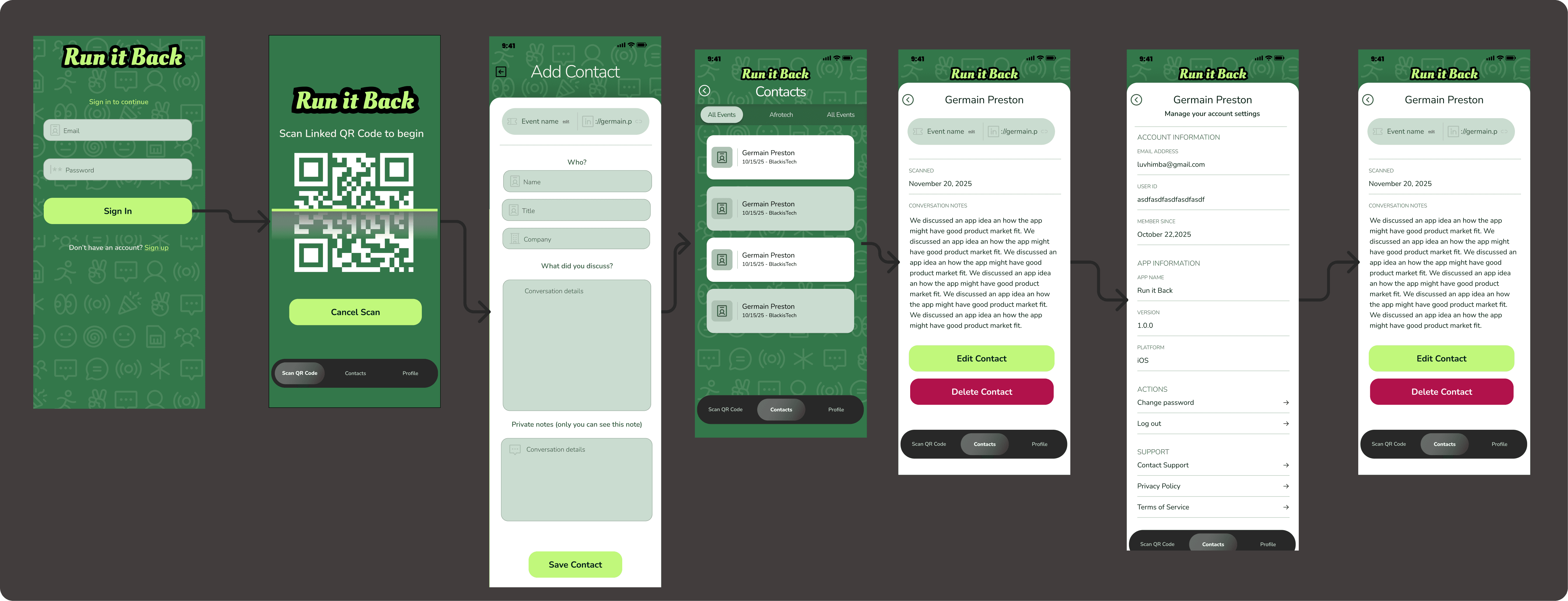
Field Testing at Afrotech
I used the app throughout the conference. Captured 16 connections with full context notes. One week later, I could recall specific conversation details for every one of them. Three of those connections turned into follow-up meetings that wouldn't have happened without the context the app preserved.
That's the validation that mattered: not a polished demo, but a tool that changed actual behavior in a high-pressure environment.
What This Demonstrates as a UX Designer
This project isn't on my portfolio because I built an app. It's here because it proves something specific about how I work.
I can prototype at production speed. Four days from idea to deployed, tested product. That changes what's possible in early product exploration, stakeholder alignment, and concept validation.
AI tools extend my range. I'm not a full-stack engineer. But I can use AI-assisted development to build functioning prototypes that go far beyond static mockups or clickable Figma files. When a PM needs to see how something actually behaves, I can show them.
I think in systems, even on side projects. Design system first. PRD before code. Scope decisions made against a clear problem statement. The same instincts I bring to enterprise product work applied here, just compressed.
Constraints produce focus. The four-day deadline wasn't a limitation. It was the forcing function that made the product better.
Outcomes
Functioning PWA shipped before Afrotech
16 connections captured with rich context during the conference
3 follow-up meetings directly attributed to context preserved in the app
Validated an AI-assisted development workflow now applied across subsequent projects
Identified a real gap in conference networking tools: context preservation vs. contact collection
What's Next
Building toward native iOS and Android using React Native. Planning task-based usability testing with real conference attendees. The core hypothesis is proven. The product has room to grow.
Reflection
The biggest learning wasn't technical. It was that treating AI as a planning partner, not just a code generator, unlocks a different kind of velocity. The investment in structured thinking upfront, defining the problem, scoping the MVP, modeling the data, made the implementation faster and the product more coherent.
That's a principle I now apply to every rapid prototyping effort.
More Projects
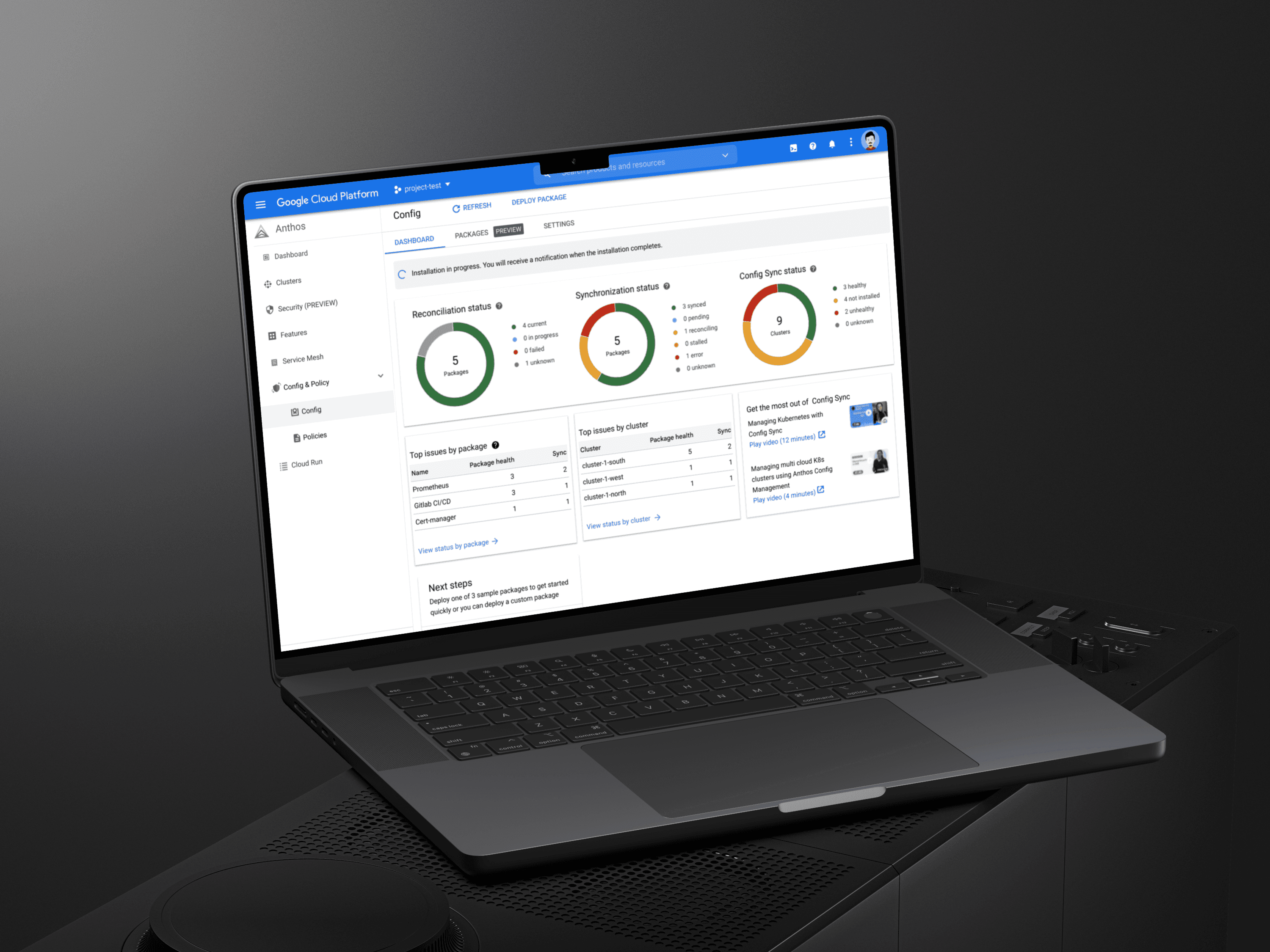
Anthos Config Management
Transforming a struggling Google Cloud feature with a 2% adoption rate into a customer retention driver by restructuring the information architecture, simplifying installation flows, and leading cross-functional alignment without PM support resulting in a 9-percentage point conversion lift.
View Project
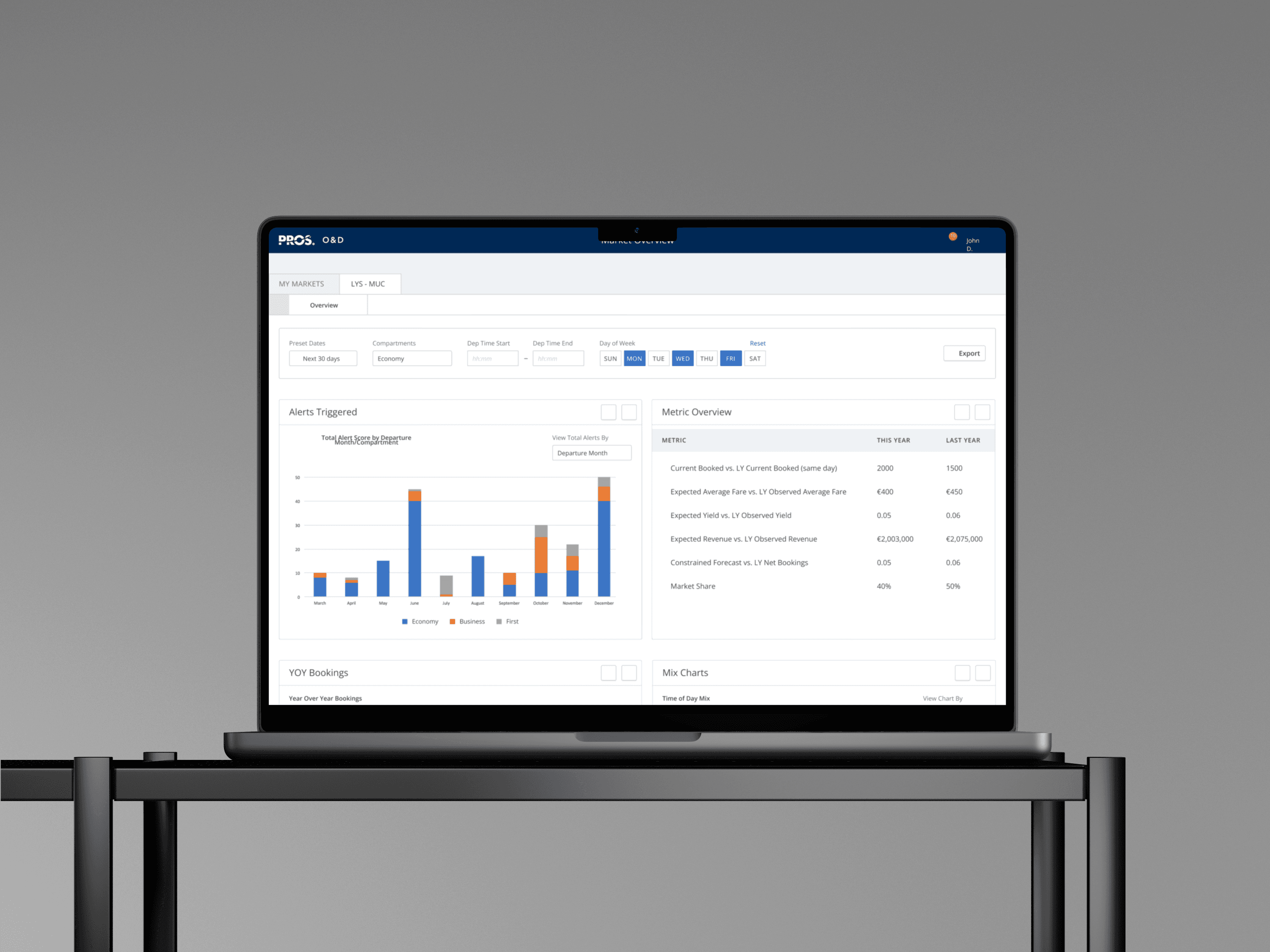
PROS O&D
When PROS's 30-year flagship product faced obsolescence, I championed a radical shift: ethnographic research with actual users instead of assumptions from external experts. The worldwide research tour uncovered workflow patterns that transformed our entire product strategy.
View Project